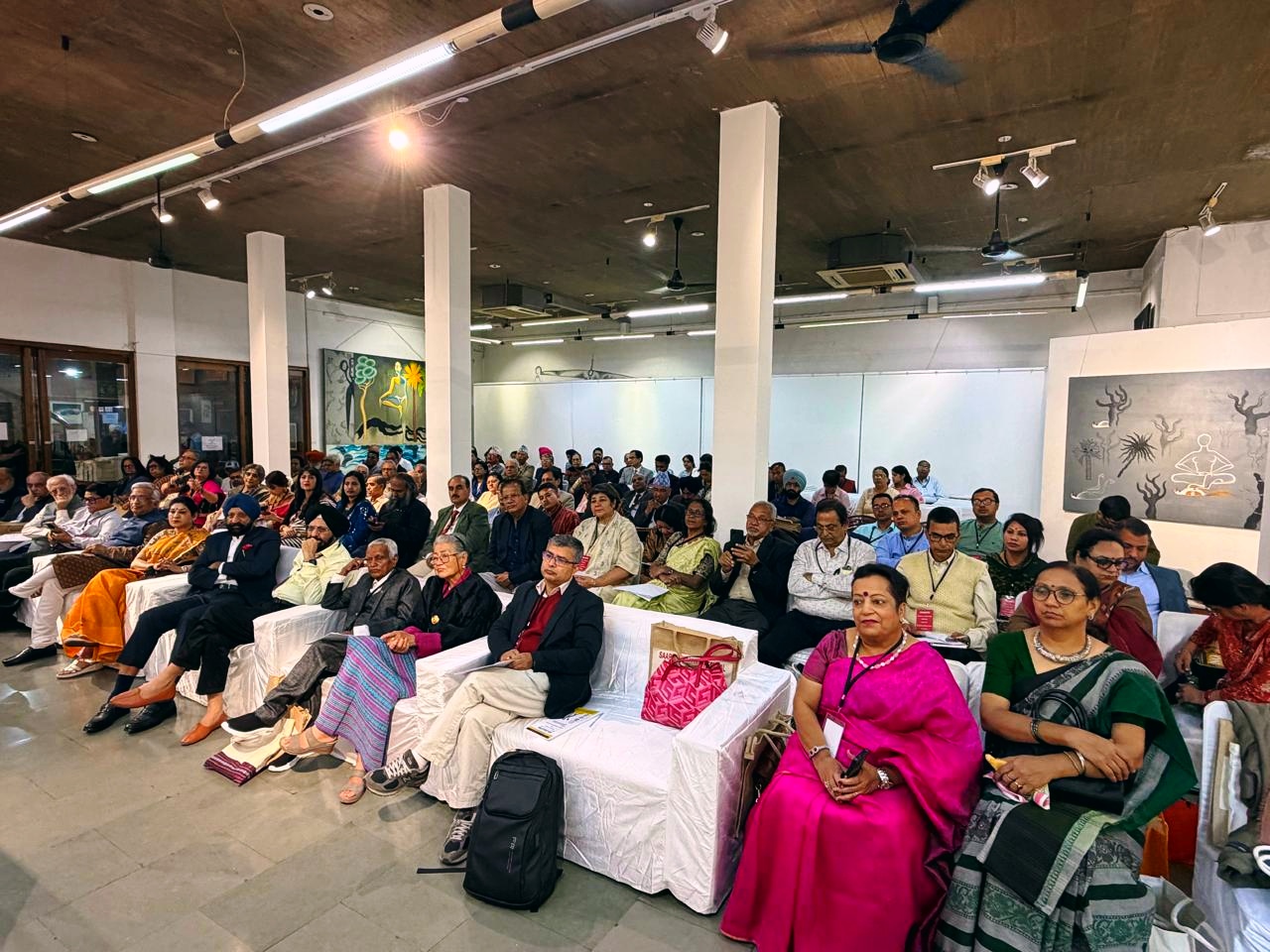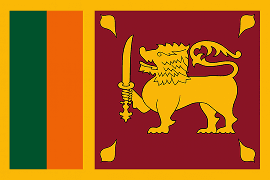
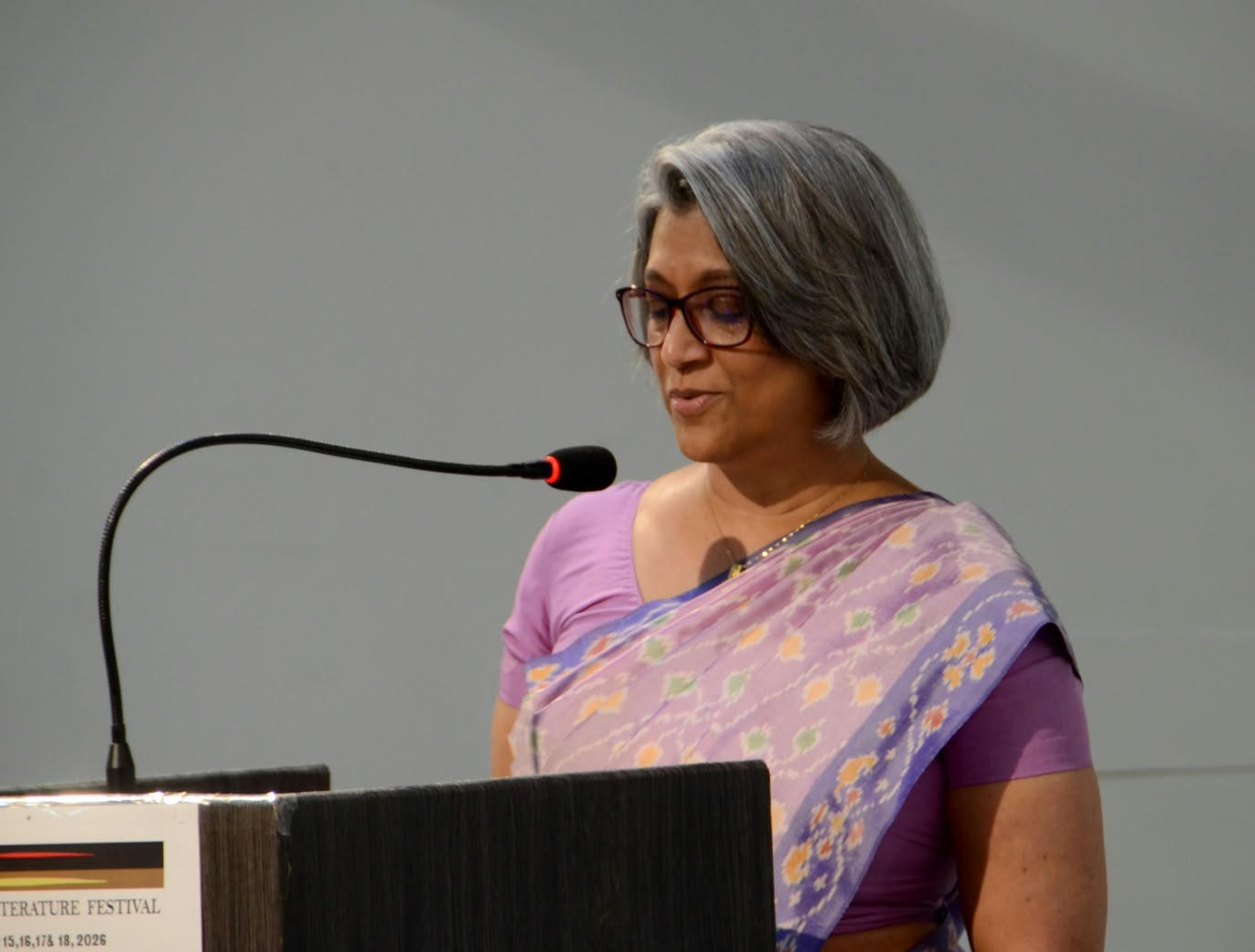
Madam Ajeet Cour-ji,
Arpana Caur-ji,
Excellencies,
Dr. Madhav Kaushik,
Ambassador Manjeev Singh Puri,
Writers, poets, thinkers, dreamers and seekers,
Ladies and Gentlemen,
Namaskar, Sat Sri Akal, As-salamu alaykum, Ayubowan, Vanakkam, Kuzuzangpo la, and good morning to all.
It is a great pleasure for me to be with you here today.
As I thought about what I might say this morning, I found myself returning to a simple question. One that literature has always asked, and that this festival has spent its whole life answering.
What is it that makes us who we are?
We speak very easily about identity: national, cultural, linguistic, religious.
We give ourselves names and categories. We draw boundaries. We build countries, communities and institutions. And there is good reason for this. Countries matter. Borders matter. They are how our world is organised: the system through which we govern ourselves, keep order, and work with one another. Without them, it would be very hard for the world to function at all. For countries like mine, emerging from colonial rule, the nation state was how we won the right to govern ourselves. I have spent my working life serving one, and I believe in it.
I am Sri Lankan. But the more I think about what it means, the more I feel that what I am most deeply conscious of in connection with where I come from is – being from an island: its art forms, its history, its languages, its literature, its landscape, its fauna and flora, the ocean, its sounds, and its memory.
An island knows its boundaries well. They are drawn not by anyone's hand, but by the sea. And yet, for an island, the sea has never been only a boundary. It has always been the way the world arrives.
But I wonder whether identity is all that we are. Much of what we call identity, we inherit. Some of it we acquire. Some of it we choose. And much of it changes as we move through life and meet people, places and ideas that quietly become part of us. And there is something we tend to forget.
And that is – that we made these things ourselves, and many of them quite recently. For most of human history, the poets, pilgrims and merchants who crossed from one land to another carried no passports. We built borders to organise the world. Then, over time, we forgot that we built them. We’ve begun to treat them as if they were nature itself, as if they defined us completely, and defined others too. Perhaps that is where many of our difficulties begin.
Because when a distinction becomes absolute, difference turns into distance. And an identity that was meant to give us belonging becomes a reason to exclude. A border is a line of responsibility. It was never meant to be a wall around the mind.
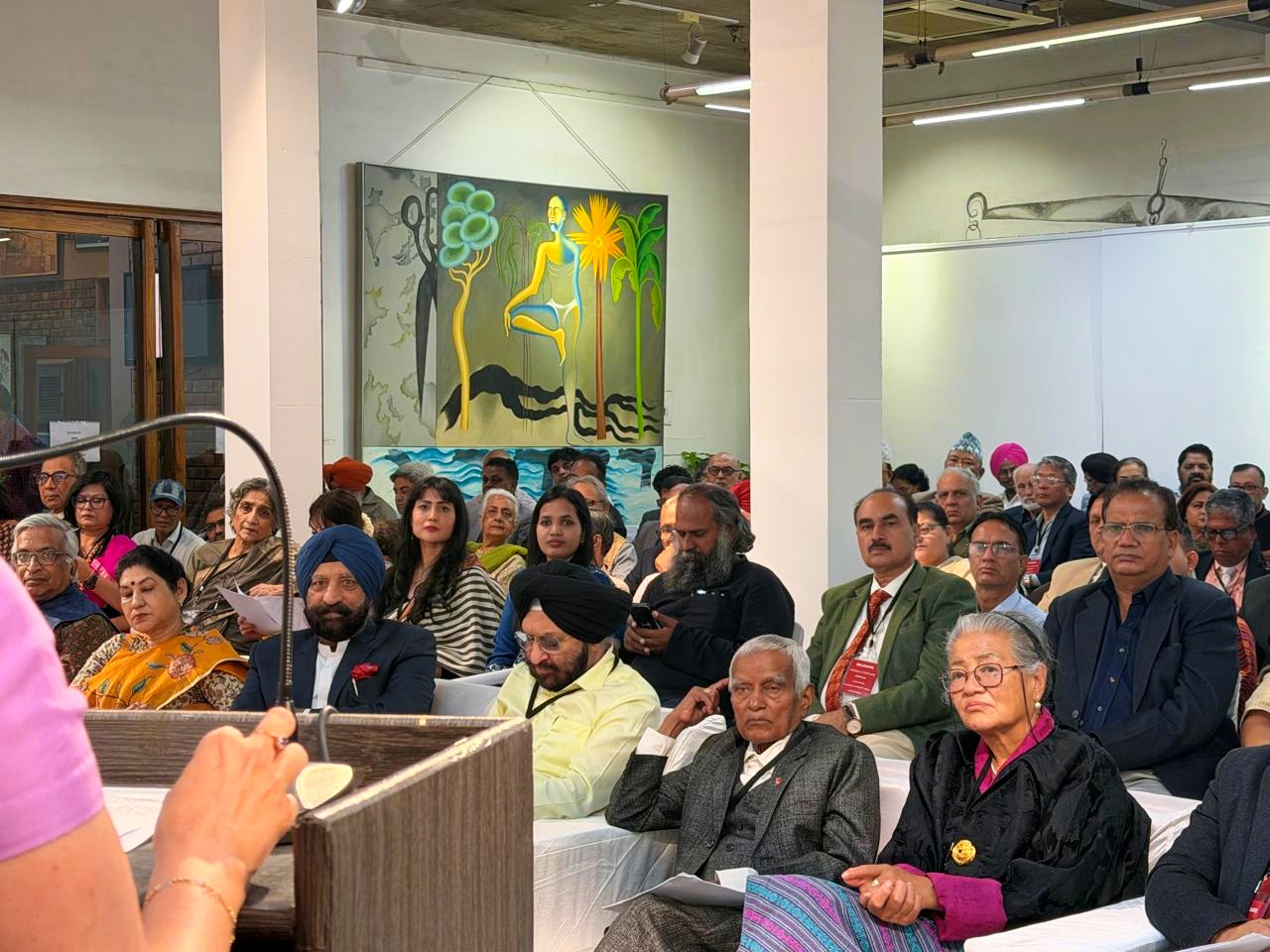
Literature offers us a quiet way out of this. A poem does not ask who we are before it moves us. A novel does not require us to share its author's nationality, faith or language before we step into its world. For a while, we see through another person's eyes, without either of us having to become the same. And beneath all the identities we carry, we find another human being, with fears, hopes, loves and losses not so different from our own. Not a shared identity, but a shared humanity. That is, to me, the deeper meaning of a gathering such as this.
I first met Madam Ajeet Cour-ji in Sri Lanka, nearly two decades ago, when I was Director - SAARC in our Foreign Ministry. My world then was one of declarations, communiqués and summit outcomes. Hers was something official diplomacy, for all its effort, cannot do on its own: bringing writers into the same room, across every line that divides them, and letting them speak to one another, freely.
Later, as Deputy High Commissioner here in Delhi, I came to her gatherings whenever I could. I have kept coming back ever since.
Over those years, I have come to see that few people have lived the question I began with, as fully as she has. She was thirteen when she left Lahore for Delhi in 1947, when a line drawn on a map decided, almost overnight, where millions of people belonged. Years later, she called her autobiography Khanabadosh: the nomad, the one without a fixed home.
And yet, out of that experience, she built not a wall but a home for others. What she has called her "mad dream" has now gathered us sixty-seven times. She has never asked us to speak with one voice. She has made room for many. Since tomorrow is her 92nd birthday, may I offer Madam Ajeet Caur-ji, on behalf of all of us, our warmest wishes a day early.
I would also like to thank Arpana Caur-ji. Her art has quietly sustained this festival for many years, and this morning we heard her mother's words in her voice. There is something very moving in that: a daughter carrying her mother's dream forward, with the same devotion with which it was first dreamed.
I am especially glad to see so many Sri Lankan writers here this year, and I congratulate Dr. Kumara Hettiarachchi on receiving the SAARC-FOSWAL Literature Award.
A few weeks ago, I told students at Kirori Mal College that one of the quiet risks of our time, is to be connected to everyone, and to understand no one. Literature is one of our best answers to that risk, because it asks for something our age has little patience for: attention to another person, slowly, and on their own terms.
My own relationship with India has taught me this. I first came here as a young student in Pune. I have returned many times since: as a young diplomat, as a pilgrim, as an aunt visiting her nephews, as Deputy High Commissioner, and now as High Commissioner. The roles could hardly be more different. Yet, each time, I arrived as an outsider entering another world, and discovered how much of that world could become my own. We do not become less of who we are when we encounter another culture deeply. We become larger than the self with which we began.
So, as this 67th SAARC-FOSWAL Literature Festival begins, let me leave you with one thought. We have our roots: our histories, our languages, our communities and our countries. But roots are not walls. They are what allow us to grow. And literature may be one of the ways we learn to grow beyond the boundaries we inherited, without losing the ground from which we came.
Madam Ajeet Cour-ji, thank you for spending your life creating that space for others. And to all the writers and poets gathered here: may your words continue to do what perhaps only literature can do, allowing us to remain entirely ourselves while opening a door into the life of another. For when that happens, the line between "you" and "I" grows a little fainter. And in that space, we come a little closer to understanding not only one another, but ourselves.
Dhanyavaad. Bohoma Sthuthi. Nanri. Shukriya. Thank you.